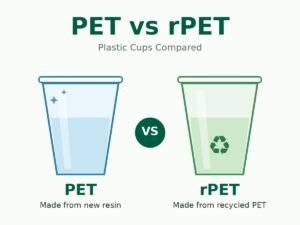
PET and rPET look identical on the shelf — both clear, rigid plastic cups that show off the drink inside. The difference sits in the material itself — and in what your customers read on the label.
PET is virgin plastic, made from new raw material. rPET is recycled PET — used PET collected, cleaned and reprocessed into new cups. For a café, dessert shop or drinks brand ordering custom printed cups, the choice affects clarity, cost and the story you tell. This guide compares the two side by side, so you can order with confidence.
Every size below is available in PET or rPET, with the same printing and the same lids. You can see the full range in our plastic cup collection.
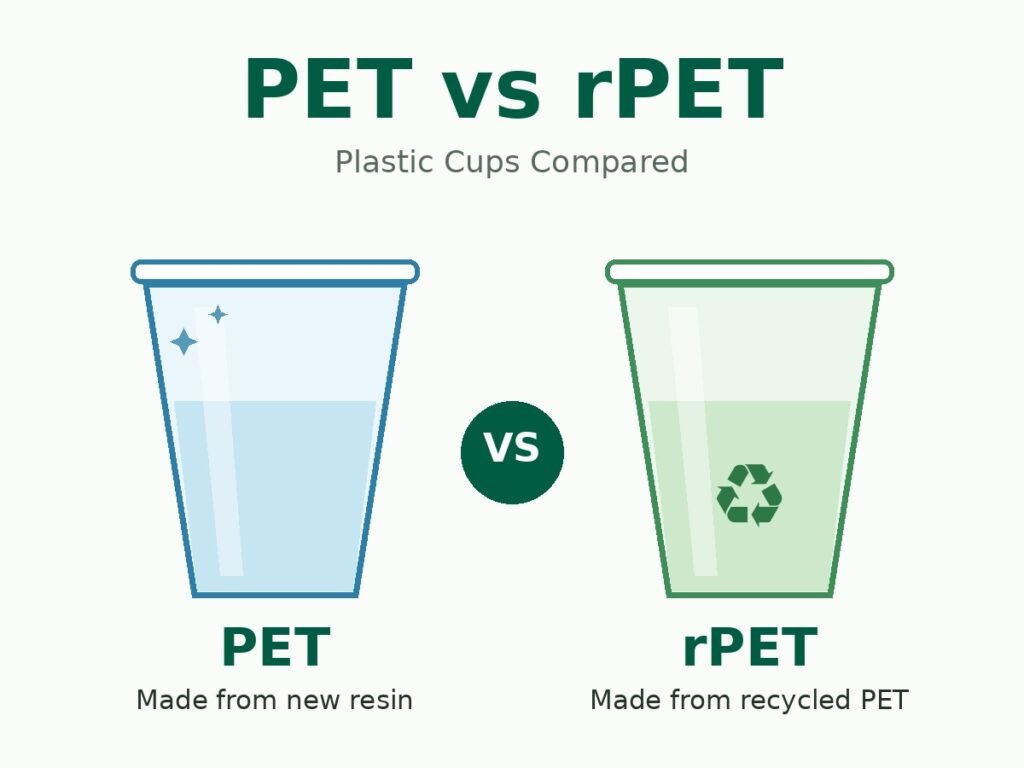
What PET and rPET Actually Are
PET stands for polyethylene terephthalate — the clear plastic used for most cold drink cups, water bottles and dessert cups. Virgin PET starts as new resin. It is consistent from batch to batch and gives the brightest, most glass-like clarity a plastic cup can offer.
rPET is the same plastic, made a second time. Used PET — mostly collected bottles and trays — is sorted, washed, flaked and melted into new resin, then formed into cups exactly like virgin PET. The chemistry is the same, so a food-grade rPET cup behaves like a PET cup in daily use.
One point matters most: both are for cold drinks only — neither suits hot drinks, hot filling or microwaves. Both work for iced coffee, bubble tea, juice, smoothies or ice cream. If you serve hot drinks, look at paper cups instead.
At our factory both run through the same lines — the same moulds, printing and 98mm lids. The choice is about the material, not a different cup.
Clarity: Can Customers Tell the Difference?
Clarity is where virgin PET still leads. A virgin PET cup is water-clear, so layered drinks, bright fruit and pastel desserts look their best.
rPET can be very close, but not always identical. Recycled resin may carry a faint grey or yellow tint, depending on the quality of the collected material. High-grade food-grade rPET is hard to tell apart from virgin PET at arm’s length; lower grades show a visible tint, especially against a white background.
For bubble tea, where the drink carries the colour, a slight tint rarely matters. For layered parfaits or fresh juice, where the drink’s colour is the selling point, maximum clarity earns its keep.
The honest way to decide is to hold both in your hand: ask for a sample of each material in the same size, fill them with your drink, and look at them under your shop lighting. A photo on a screen will not show the difference, and samples take 3–5 days.
Cost: What rPET Really Adds to Your Order
rPET usually costs more than virgin PET. Collection, sorting, washing and food-grade reprocessing add steps that virgin resin does not need. The gap moves with the recycling market, so treat any fixed percentage you read online with care.
What does not change is the order itself. Custom printing starts at 10,000 pieces for both materials, and mass production takes 12–15 days after artwork approval, whichever material you pick.
So the real cost question is not the unit price alone — it is what the material buys you. If your buyers ask for recycled content, rPET can open doors virgin PET cannot — a retailer with a sustainability policy, a catering buyer, or a market with recycled-content rules may only accept rPET. Then the extra cost is not a premium. It is the price of the order.
If no buyer asks for recycled content and clarity is your top priority, virgin PET gives you the clearest cup at the lowest cost. The mistake is paying for rPET without a reason — or choosing virgin PET and then finding your biggest buyer requires recycled content.
Recycled Content and Sustainability Claims
This is where buyers most often get tripped up. “Recycled content” is not one number: a cup can contain 30%, 50% or 100% recycled material, and the figure changes the story and the price. Before you print any claim on the cup, get the actual figure for your order in writing.
Be careful with the words on the cup as well. “Made with recycled content” is a claim you can stand behind when you have the figure. “Eco-friendly” or “100% green” says almost nothing. A precise claim beats a grand one.
Also check the rules in your market before you print. Some regions restrict single-use plastic claims or require specific wording; others reward recycled content in public tenders. Confirm the current position for each market you sell into rather than copying a claim from another brand’s cup.
One more honest point: rPET reduces demand for new plastic and keeps used material in circulation. That is a real benefit — but it does not make a single-use cup reusable or compostable. Tell the story straight, and it will hold up when a buyer checks it.
Food Safety and Everyday Use
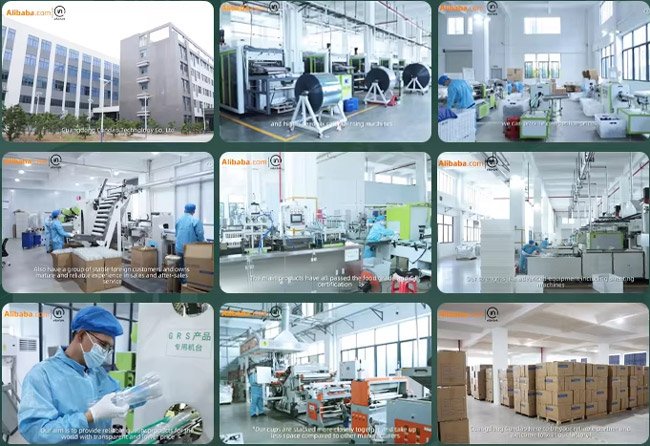
Both materials are safe for food contact when they are made properly. Our cups are produced in an ISO 9001 and BRC certified factory, with food-contact materials compliant with EU 10/2011 and LFGB. Ask any supplier for the same documents — a certificate is worth more than a sentence on a website.
Daily use is identical for both. They take the same lids, stack the same way and travel the same way. Our 98mm series uses three lids — flat, dome and wide-hole dome — and all three fit every size in PET and in rPET, so one lid order covers the whole range.
Storage is the same too: keep cups dry, out of direct sun and away from heat, or a warped rim will not seal.

PET vs rPET at a Glance
| Virgin PET | rPET | |
|---|---|---|
| Raw material | New resin | Recycled PET, reprocessed |
| Clarity | Brightest, water-clear | Very close; may carry a faint tint |
| Cost | Lower | Usually higher; gap moves with the market |
| Recycled content | None | Varies by order — confirm the figure |
| Food contact | EU 10/2011, LFGB compliant | Same, when food-grade resin is used |
| Lids and printing | Same 98mm lids, same full-colour print | Same 98mm lids, same full-colour print |
| Best for | Maximum clarity, tight budgets | Recycled-content buyers, brand story |
How to Choose: A Quick Decision Guide
Start with your buyer, not the material. If a retail or corporate buyer requires recycled content, the decision is already made — order rPET and get the figure in writing.
Choose virgin PET when clarity sells the drink — layered iced coffee, fruit juice, colourful desserts and anything photographed for a menu. Choose rPET when the sustainability story matters more, or when your brand has made a public commitment to recycled packaging.
Then match the size to the serving. A 5oz cup suits tastings, kids’ servings and mini desserts. The 8oz is the standard single serving. The 12oz cups handle large servings and sundaes — the wide-based A cup for scoops, the tapered B cup for iced drinks. All four share the same 98mm rim, so lid stock stays simple.
Whatever you choose, order samples first. Hold the cup, fill it with your drink, fit the lid and check the print proof. A sample round takes 3–5 days and answers every question in this guide better than any article can. Then confirm the order: size, material, recycled-content figure if you chose rPET, artwork and quantity. Custom printing starts at 10,000 pieces.
Frequently Asked Questions
Is rPET as safe as virgin PET for food and drinks?
Yes, when it is food-grade recycled PET made to the right standard. Our cups comply with EU 10/2011 and LFGB in both materials — ask your supplier for the documents for the exact material you order.
Can customers see the difference between PET and rPET cups?
Usually not at a glance — high-grade rPET is close to virgin PET in clarity. A faint tint can show in lower grades, so check samples filled with your own drink before you order in bulk.
Do PET and rPET cups use the same lids and printing?
Yes. Both take the same 98mm lids — flat, dome and wide-hole dome — and the same full-colour printing. Custom printing starts at 10,000 pieces for both materials, and production takes 12–15 days after artwork approval.
Ready to Order?
PET gives you the clearest cup at the lowest cost. rPET gives you recycled content your buyers can verify. Both come in the same sizes, with the same lids and the same printing — so the choice comes down to your drink and your buyer.
Send us your size, material choice and artwork through our contact page, and we will come back with a quote and a print proof — samples are ready in 3–5 days.

Nick Zhang — Packaging Engineer
Nick Zhang is the packaging engineer behind the UNICO Packing blog. He has spent over 20 years in printing and packaging and knows the craft inside out — paper and board selection, offset printing, color management, lamination, foil stamping and die-cutting. Nick is strict about quality: he controls color difference and checks material quality batch by batch, and no box leaves the factory until it meets his standard. Here he shares his hands-on experience to help buyers make packaging decisions.